Farm Journal
Welcome to Shaggy Ink Farms
A first field note on family, oak pasture, a mixed laying flock, Barred Rock breeding work, and the long work of building a Northern California homestead from the ground up.
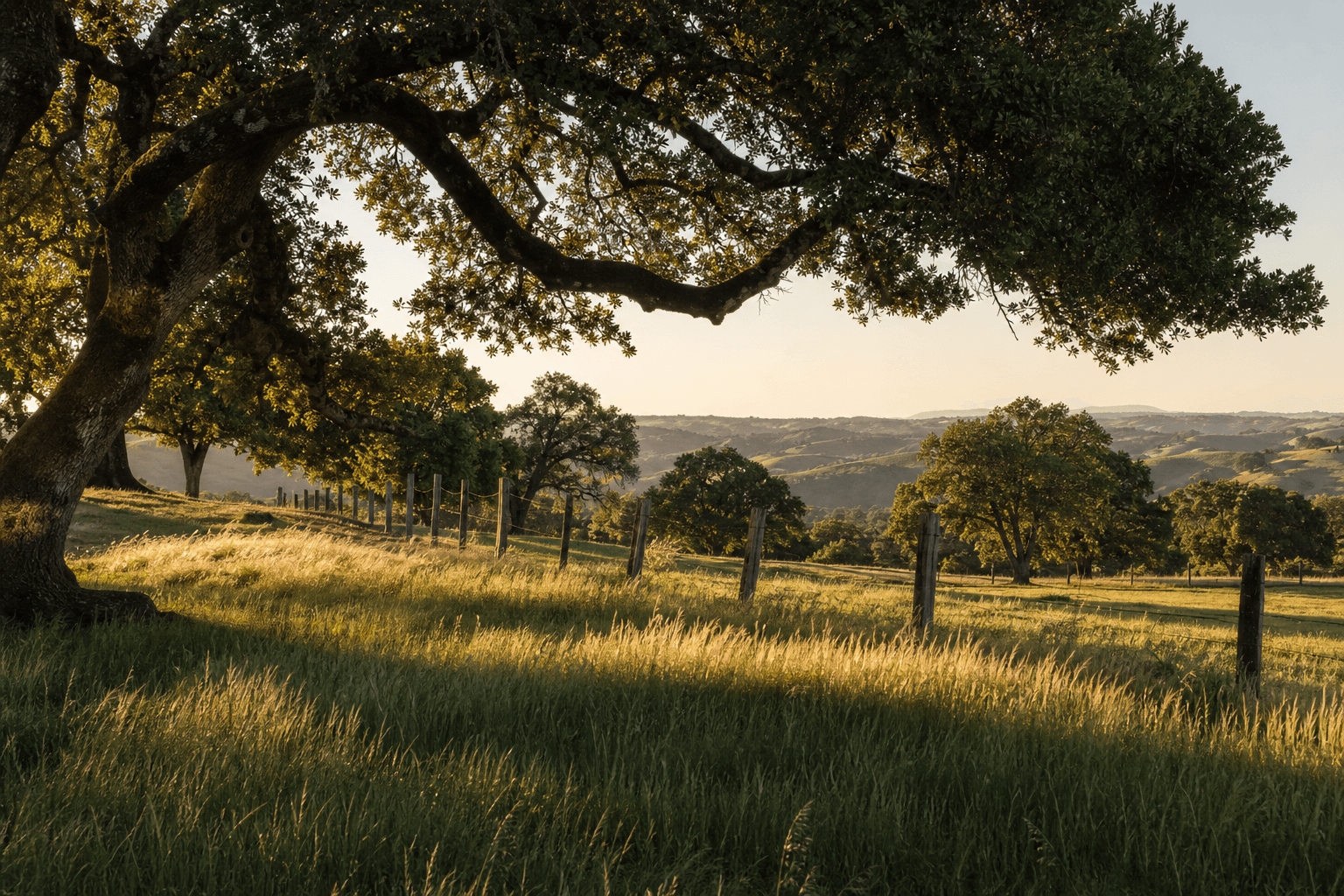
Welcome to Shaggy Ink Farms. If you are finding us at the beginning, that is the best place to arrive. The fences are still being improved, the systems are still being tuned, the flock is still teaching us, and the farm is becoming itself one project at a time. We are a Northern California family homestead set among mature oak trees and open pastureland, with a mixed laying flock now and a Heritage Plymouth Barred Rock breeding program being built slowly.
We started this farm because we wanted our daily life to have more weight to it. Not heavier in the sense of burden, but heavier in the sense of meaning. We wanted our children to grow up close to chores that mattered, seasons that could not be rushed, animals that required attention, and land that asked for patience. We wanted work that left evidence: a better gate, a stronger coop, a full egg basket, a garden bed ready for rain, a child who knows how to notice tracks near the fence line.
There is a particular kind of hope in building from the ground up. It is not polished hope. It comes with mud, mistakes, receipts, and late evenings. But it is real. Every small improvement changes the shape of the place. Every decision becomes part of the next decision. Where should the chickens be safest? How does the afternoon sun move through the oaks? Which project needs to happen before winter? What can be made, repaired, reused, or learned before we buy something new?
Family First, Farm Second, Story Always
Shaggy Ink Farms is a family homestead before it is anything else. That matters because the farm has to serve real life. It has to make room for school days, meals, chores, birthdays, tired evenings, new ideas, and the ordinary rhythm of a family trying to build something honest. The work is not separate from family life. It is woven through it.
That is also why we are keeping a record of the work. A homestead has a thousand small stories, and most of them are easy to lose if nobody writes them down. The first egg from a young hen. The first time a child confidently carries feed. The first storm that tests a roofline. The first version of a label that finally feels right. The first video that turns a regular chore into something useful for somebody else.
We want Shaggy Ink Farms to feel personal and honest. The aim is simple: take good care of the place, raise useful birds, grow food and flowers, teach the kids real work, and share enough of the process that people can follow along without us pretending the farm is finished.
Why Northern California Shapes the Farm
Northern California shapes this place. Mature oaks, dry grass, warm light, wildlife edges, weathered fence posts, and wide pastureland are not background decoration. They are daily conditions. We are not trying to copy a generic farm postcard. We are building from the land we have, the climate we live in, and the rural character of this part of California.
The oaks slow everything down in the best way. They make you look up. They mark the seasons. They hold shade in summer and shape the way a pasture feels at golden hour. Mule deer moving through the edge of the property, chickens scratching near a fence, and the long line of an evening shadow are part of the place because we see them every day.
We want the farm to reflect a conservation-minded respect for that setting. That does not mean pretending to have everything figured out. It means paying attention. It means making choices that protect animals, improve systems, reduce waste where we can, and keep the land in mind when we make plans. A homestead is never just a collection of projects. It is a relationship with a place.
The Chickens That Started the Pattern
Our long-term poultry focus is the Heritage Plymouth Barred Rock chicken. There are practical reasons for that choice, and there are emotional ones. Barred Rocks are a classic American farm breed: useful, sturdy, familiar, and beautiful in a way that feels earned. At the same time, our laying flock is mixed, with Rhode Island Reds, Salmon Faverolles, Ameraucanas, Olive Eggers, Copper Marans, Plymouth Barred Rocks, and other birds all part of the current farm rhythm.
But a good chicken is more than a logo. The flock creates daily rhythm. Feeding, watering, checking birds, watching behavior, collecting eggs, improving housing, and learning the needs of individual birds all turn an idea of a farm into actual husbandry. Chickens are a beginning that keeps beginning. They are accessible enough for a family to start with and serious enough to reward deep study.
The Barred Rocks also connect us to a wider American farm history. They remind us that poultry was once bred for families, small farms, local food, and practical resilience. As Shaggy Ink Farms grows, we want to honor that history carefully. We will be clear about what we know, honest about what we are still learning, and respectful of the breeders and conservationists who have done the long work before us.
Building the Homestead in Public
A lot of what we are building will happen in layers. First come the essential systems: safe coops, better fencing, feed storage, water routines, predator awareness, seasonal egg handling, and record keeping. Alongside that come the gardens, cut flowers, strawberries, orchard trees, field notes, photography, video, and small farm goods if they fit the real work of the place.
We are especially excited about YouTube because video can show the honest middle of a project. A finished coop looks clean in a photograph, but a video can show the wrong measurement, the second trip for hardware, the reason we changed a detail, and the family conversation that happened while the work was getting done. That kind of record is useful. It also keeps us accountable to the real version of the farm.
Eggs will be seasonal and small-flock by nature. We are not building an industrial egg operation. We are building trust around a limited product that comes from living birds, real weather, daylight, molts, feed, and care. When eggs are available, we want them to feel connected to the place they came from: the flock, the pasture, the carton, the note in the box, and the family work behind it.
Projects will be part of the story too. Coops, fencing, garden beds, labels, workbench repairs, seasonal improvements, and small handmade goods all belong here. Some projects will be practical. Some will be beautiful. The best ones will be both. We want the farm to carry a sense of craftsmanship that feels more like a well-used field journal than a showroom.
What Comes Next
The future plan is simple in direction and large in scope: care for the flock, build the Barred Rock program carefully, grow food for the family, establish flowers, strawberries, and orchard trees, offer seasonal eggs when we have them, and make videos and articles that tell the truth about the process.
If you are here early, thank you. We are not asking you to believe in a finished thing. We are inviting you to follow the making of it: the first flock notes, the first egg updates, the first videos, the first garden wins, the first store pieces if they make sense, and the first lessons learned the hard way.
This is the opening field note. The gate is open. Welcome to Shaggy Ink Farms.